
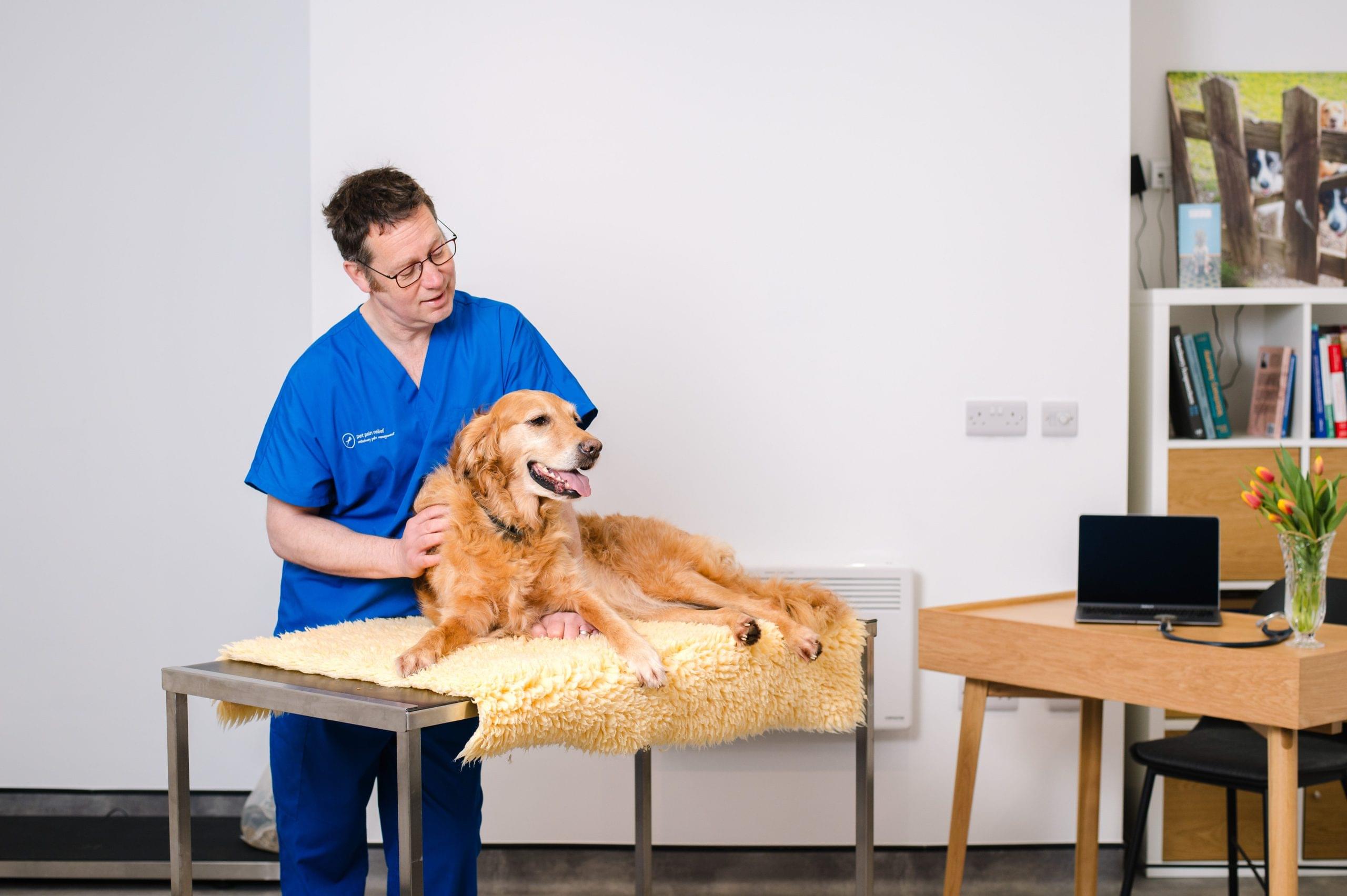
Pain Relief for Dogs and Cats – Specialist Veterinary Pain Management
Helping pets live more comfortably when pain is limiting their mobility, behaviour, or enjoyment of daily life.
Some pets live with chronic pain quietly — they don’t always limp or cry, but they slow down, move differently, sleep poorly, or seem “not themselves”.
We provide referral-level pain assessment and practical, evidence-based options to improve comfort and quality of life.
Sometimes pets continue to show signs of pain despite appropriate investigations and treatment. Others can appear uncomfortable even when tests haven’t yet identified a clear cause.
Pet Pain Relief provides specialist assessment and guidance for dogs and cats with persistent or complex pain. Our role is to help clarify where pain is coming from, and to recommend realistic, evidence-based options to improve comfort and quality of life.
When pain has persisted despite initial treatment, a tailored plan — combining medication optimisation, supplements where appropriate, targeted injections, and lifestyle changes — often leads to meaningful improvements in comfort, behaviour, and mobility.
When the cause of discomfort is less clear, we take time to identify likely pain sources and guide you through appropriate next steps. Once the drivers of pain are understood, many pets can be made significantly more comfortable.

When referral-level pain advice may be appropriate
Chronic pain in animals is often multifactorial. Musculoskeletal, neurological and soft tissue pain can overlap, making diagnosis and treatment challenging.
We commonly see pets who:
- Have a diagnosis but have not responded as expected to treatment
- Have ongoing pain despite appropriate medication
- Show subtle changes in behaviour, mobility or temperament that suggest discomfort
- Have unclear, mixed, or incomplete findings following routine investigation
A careful, structured assessment can often identify multiple contributing sources of pain — and unlock additional options to improve comfort.
How can I tell if my pet is in pain?
A specialist, methodical approach
Each consultation is centred on understanding your individual pet.
This includes:
- A detailed review of medical history and previous investigations
- A thorough pain-focused examination, including movement, posture, and behaviour
- Considering all likely contributors to pain (not only those already identified)
- Optimising medications and adjunctive options to match the type(s) of pain present
- Discussing and, where appropriate, providing advanced options such as joint and nerve injections
Where targeted investigations or interventions may help, we explain the options clearly and share recommendations with you and your primary veterinary surgeon so decisions can be made collaboratively.
Pet Pain Relief operates as a referral-level advisory service and does not replace primary veterinary care. A written report is provided after assessment, outlining findings and clear management recommendations to support ongoing care with your usual vet team.
Who are we?
Dr James Hunt is recognised for his work in the management of painful conditions in dogs and cats, and combines specialist training with a practical, compassionate approach to quality of life.
James holds the RCVS Certificate in Anaesthesia, along with Master’s and Doctorate degrees in acute and chronic pain management. He is an EBVS® and RCVS Specialist in Animal Welfare Science, Ethics, and Law, and a Founding Fellow of the ACVAA Pain Management Fellowship.
Most importantly: the clinic’s focus is simple — helping pets feel more comfortable and helping owners feel supported with clear, honest guidance.
How do we work?
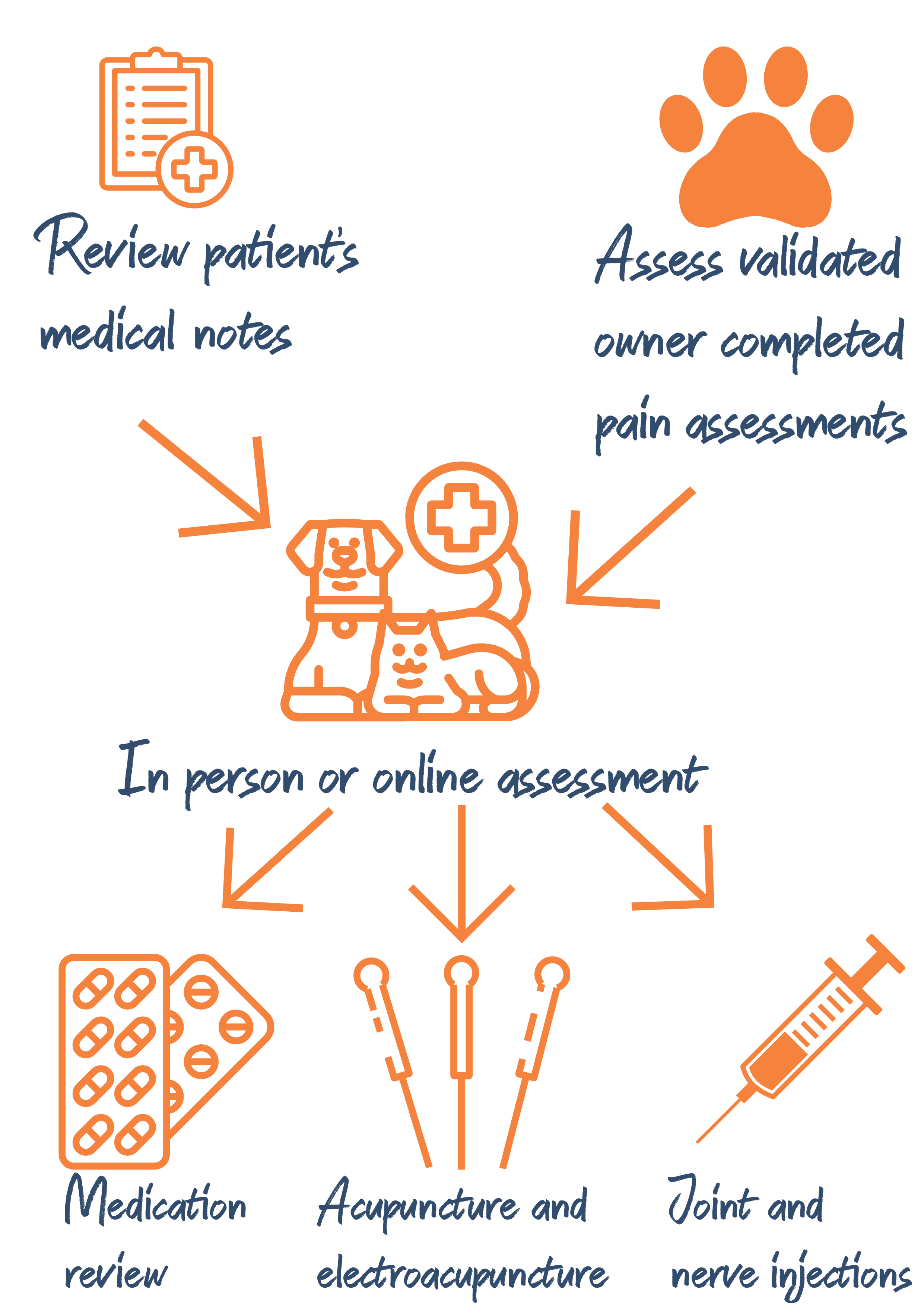
Before your appointment, James reviews your pet’s medical history and any test results from your vet. You’ll also be asked to complete short questionnaires to help us understand how pain is affecting daily life.
The first consultation is typically around an hour and includes:
- Reviewing current medications and what has/hasn’t helped
- A gentle, pain-focused physical assessment
- Identifying the main contributors to pain and discomfort
- Agreeing a practical plan tailored to your pet and your home routine
For online appointments, we review photos and videos of your pet’s movement and behaviour, alongside the clinical history.
James will explain the available options — including benefits, limitations and risks — so you can make informed choices. Where helpful, musculoskeletal ultrasound may be used to assess soft tissues. Occasionally, referral elsewhere for advanced imaging (CT/MRI) is recommended; other times, a careful trial based on the most likely pain source is the best next step.
If suitable, options may include acupuncture, laser therapy, pain-relief infusions, and targeted injections (for example around nerves, the spine, or into joints).
After the visit, you’ll receive a detailed report for you and your vet, including recommendations for medication, investigations (if needed), and lifestyle changes. Prescriptions can be provided where appropriate.
A realistic focus on comfort and quality of life
Not all pain can be eliminated — but in many cases it can be better understood and more effectively managed.
Our aim is to help pets:
- Move more comfortably
- Rest more easily
- Feel calmer and more like themselves
- Engage more fully in day-to-day life
Even small improvements can make a big difference to quality of life.
Our commitment to you…
We recommend options based on what is best for your pet
We are clear about likely outcomes, costs, and risks
We communicate in plain language — and we welcome questions
We work alongside your regular vet and keep them updated
If another clinician or centre is better placed to help, we will tell you
Your pet’s care is a team effort. If anything is unclear at any point, please ask — we want you to feel informed and supported.